Why Your Brand Needs a Story

Your brand is much more than your logo or your company name. Brands inherently carry value, and they represent your company’s identity. The best way to inform your audience of the values your brand represents is to take them on an engaging journey and get them caught up in caring about your story. To make these concepts somewhat less abstract, we will explain in detail why your brand needs a story.

How to create a story for your brand

Unfortunately, developing an engaging story that captures the interest of your audience isn’t all that simple. You can’t just cobble together an About us page and call it a day. Technically you could, but that isn’t exactly the type of winning storytelling you are trying to achieve.

You’ll need to go back to your core values and ask yourself what exactly you want to accomplish. Think about what prompted you to found the company in the first place. Was there a specific spark of inspiration that led to the conception of your products? Generally, most products and services are created to respond to a need or solve a problem users might be having. Try to put into words the problems you are trying to solve and how you will make that happen for your customers.

Give your audience a taste of what makes your company unique, and inform them how their experience will be different if they choose to do business with you. Have your marketing carry meaning and purpose, and make your company’s values permeate every customer interaction. You might think that your products set you apart from the competition, but you first need to find a way to tell that to your audience.

What makes a good story?

You actually don’t need too many ingredients for a story to be good. Pretty much all that’s required is to have compelling characters and an obstacle they need to overcome. In this instance, your brand and all the people behind it will be the characters. When it comes to the obstacles – you can simply talk from experience. Stories are always about building a relationship with your audience. It’s time to open up and share your experiences and the struggles your business has faced so far. People always love a good underdog story, and if you present your tale in a compelling way, your audience will empathize and root for your success.

The benefits of creating a story for your brand

Having a story associated with your brand is a great way to get people to care. There are more businesses fighting for their 5 minutes in the spotlight than there are minutes in the day. It has become exceedingly difficult to stand out in an overcrowded market. However, if you manage to elicit a positive emotional response, you are more likely to create a lasting impression. By creating a captivating story, your brand will get easily recognized. Getting people to know who you are and care for your story is what marketing is all about. This is ultimately why your brand needs a story – because people’s impressions of your brand will make or break your business.

Brand storytelling in the modern marketplace

Basic psychology says you have very little time to make a first impression. You either win people over, or you don’t, and getting a do-over is almost impossible. Unfortunately, user attention spans in online spaces are ridiculously short. The average user is constantly bombarded by tons of information, and they have grown desensitized to traditional marketing. This gives you only a few opportunities to tell your story and explain what your brand is all about. Making an impactful first impression is why your brand needs a story that will help you attract the right audience.

You can forget traditional storytelling techniques. Your marketing on social media needs to be attention-grabbing, short, and impactful. Social networks like TikTok and Instagram commonly have users scroll over vast amounts of content in a manner of seconds. Businesses need to go the extra mile to ensure a positive customer experience because opportunities for user interaction are few and far between.

If you are in doubt about how to navigate the social media landscape, you should look at what is trending on those platforms. Both users and businesses are constantly outputting new content. Social networks have transitioned from places where users connect to platforms for consuming content. There is a reason content marketing has become the new industry buzzword. However, to make your content stand out, you need to master the art of short-form expression.

The minimalist approach

You need to be able to tell your brand story with the fewest possible number of individual elements. In this context, there are many design mistakes and pitfalls you have to avoid. All the design elements need to work in perfect harmony, and even the smallest piece of the puzzle needs to be able to tell your story.

Of course, there is also a necessity to tell your story more broadly once you get your audience to listen to what you have to say. At the end of the day, those small pieces need to connect to the larger and more complex parts. If you keep everything bite-sized, your values will appear to be only surface level. Use your website to post long-form articles that go into more detail about important topics. Create videos that demonstrate how to use your products and the benefits they provide. Most importantly, find a way to distill the essence of that longer content. You have to be able to showcase your best qualities in snippets.

Rounding up

Creating a compelling story will take some work, but it is bound to pay off. Modern audiences want to be engaged and entertained in a way that makes them feel understood. Having them connect to your business on a personal level is the best way to build a loyal customer base. Hopefully, we’ve explained why your brand needs a story and how to go about creating one for your business. Now it’s time to get creative and let everyone know what your brand is all about.

Meta description: Does your business get the attention it deserves? Many brands are struggling to get noticed, which is why your brand needs a story.

Thanks to Mary Aspen Richardson for the submission
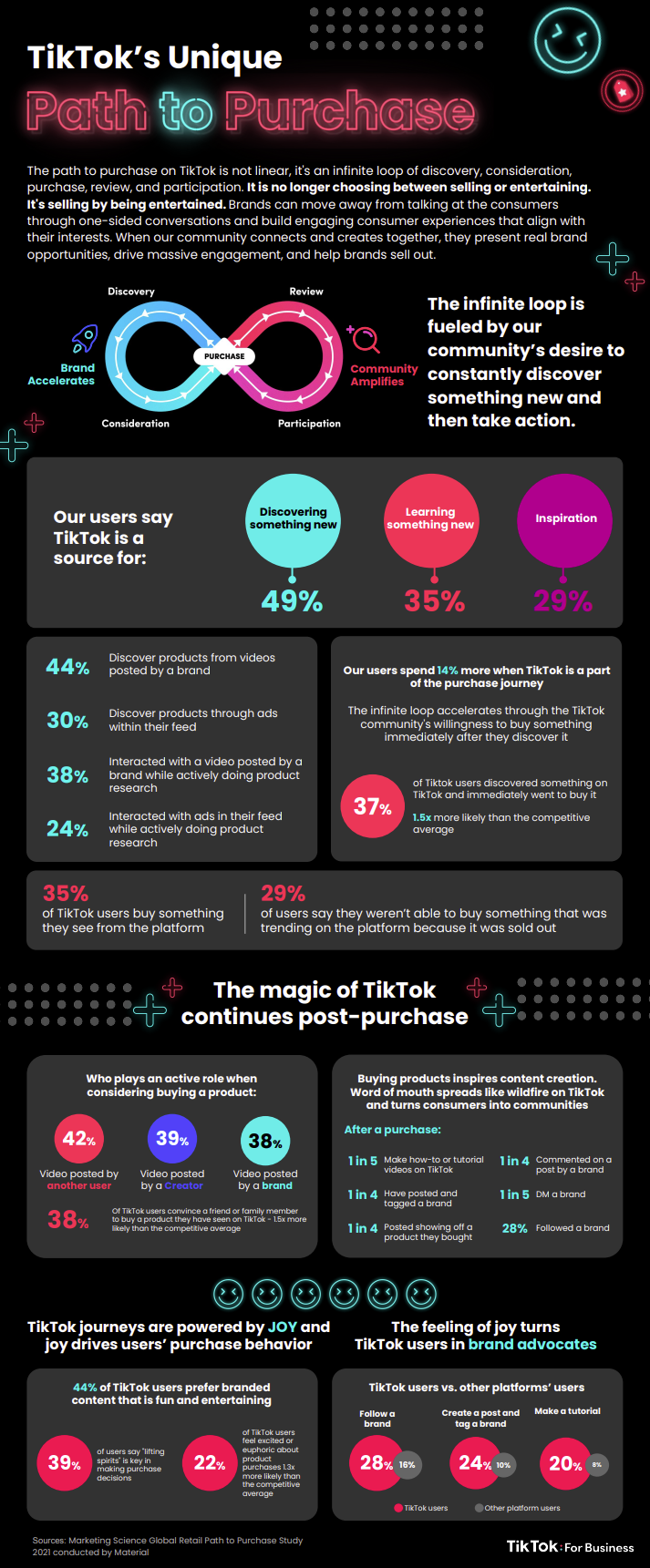
The Impact of TikTok Clips in the Purchase Journey

TikTok has published a new report which provides fresh insights into the role that its platform plays in the evolving path to purchase, and how TikTok clips can change the way that brands and consumers interact.

8 Free Google Ads Tools to Help Boost Website Traffic

Are you just getting started with a Google Ads campaign for your business? Need help creating your ads and deciding on the right way forward?

The team from Red Website Design share 8 free Google Ads tools to try in this infographic.

6 Ways to Add More Meaning and Purpose to Your Marketing Strategy

To be successful, a marketing strategy needs to be carefully thought out and meticulously planned. Creating a winning marketing strategy is always tricky. However, if you manage to get things right, it will help your business grow and expand. Rather than recommending general and vague approaches, we will discuss six ways to add more meaning and purpose to your marketing strategy.

1.  Carefully determine the goals of your marketing strategy

You’ll need to have a good idea of what you want to achieve with your marketing. Some of the most common answers usually revolve around selling more products. However, modern brands have a complex relationship with the internet, and marketing can be used for much more than simply moving products. Focusing only on sales can actually alienate some of your audience. Instead, you can look for ways to add more meaning and purpose to your marketing strategy while adopting a more humane approach.

Other goals you can achieve through your marketing strategy:

  • Increase confidence in your brand. Let customers know how committed you are to improving the user experience and gain their trust as you become the industry leader for your sector.
  • Boost your audience and increase your reach. Build a large following so your future marketing efforts will have a large audience base that is already receptive to your products.
  • Improve customer retention. Work towards building strong relationships with your customers in order to win their return business.

Although it may sound trivial, it’s important to figure out what you want to achieve through your marketing. The goals for a marketing strategy for selling a home will be quite different from marketing for an eCommerce store.

2.  Know which metrics are important for your marketing strategy

The internet is a large place, and there is an insane amount of data being generated every 60 seconds. Even if you try to look at just the data your marketing can produce, it will still be very easy to get overwhelmed by the sheer volume of information.

Realistically, not all the data you gather will be relevant. You’ll need to eliminate the needless information and get rid of as much noise as you can to focus on what’s really important, and your choice of metrics can help you there.

You can ask members from various departments which Key Performance Indicators are essential to them. However, you should also include customer feedback so that you can add more meaning and purpose to your marketing strategy.

3.  Define your audience

When trying to create a marketing strategy, it’s crucial to know who you will be marketing to. Defining your target market doesn’t mean you need to market to only one audience, but you should still know which demographics your users fall into.

If you are marketing a single product to multiple different demographics, you should make small adjustments to better resonate with those audiences. It’s also important to note where those audiences reside on the internet and customize your marketing to better fit the trends on those platforms. Social media can have an enormous impact on audience behavior, and it can also influence what kind of content will get more shares and likes.

4.  Create amazing content

For the longest time, content creation was viewed separately from marketing. On the other hand, nowadays, you simply can’t avoid industry buzzwords like content marketing.

Intermixing engaging content with your other promotional marketing can make your entire marketing strategy come off as more appealing to a wider audience. If you are struggling to find the right balance of content and promotional ads, you can follow the 80-20 rule. This means that 80 percent of your marketing needs to offer genuine value to your users.

However, you’ll also need to create a plan to distribute the content out to your audience. You don’t have to limit yourself to only one channel or platform. On the other hand, you can also hide some of your content behind a subscription, which can be a great way to get a hold of user emails and generate leads.

5.  Focus on boosting local SEO

Connecting to your local community is one of the best ways to add more meaning and purpose to your marketing strategy. You should get to know the people in your area and start building solid relationships with the people in your community. This can include both customers and other local businesses.

Support local events, or even host your own, and try to be present whenever something important is happening. This will give your marketing a hands-on approach, and your brand will become a common household name.

When it comes to the SEO side of things, you can try out some of the following:

  • Claim your Google My Business entry. Try to get on Google’s map pack to get more hits from local searches.
  • Create dedicated landing pages for your city. Whether your business has offices in multiple locations or just one base of operations, it’s a good idea to make a specialized landing page for your city.
  • Make sure your NAP is consistent. Check out all of the places your business is listed online and see if they have the correct information with your company name, address, and phone number.

6.  Automate certain parts of your marketing

Some business owners may fear that marketing automation can make their company feel impersonal. On the contrary, if you automate some of the processes that are more mundane, you will have more time to focus on your leads and build stronger relationships with your customers. Your marketing will also be much more efficient, and employees will have an easier time sharing information across teams. Automation is also scalable, so you will be able to find the perfect balance for your business.

In conclusion

Marketing can make or break any business, and if you play your cards right, you’ll be able to win over a loyal following, increase sales, and boost your brand’s reputation. A good solution to ensure your marketing stays on track is implementing these six ways to add more meaning and purpose to your marketing strategy. By following our tips, you will be able to achieve success and set up your business for long-term stability.

Meta description: Your company’s marketing needs to be able to achieve multiple goals. Here are 6 ways to add more meaning and purpose to your marketing strategy.

Images used:

https://unsplash.com/photos/8wH1NjFthaY

https://www.pexels.com/photo/white-printer-paper-on-brown-wooden-table-7413936/

https://pixabay.com/illustrations/buyer-persona-business-dental-clinic-6231739/

https://unsplash.com/photos/Q7wGvnbuwj0

How Marketing Automation Can Help Your Business Grow?

Meta description: From de-cluttered workflows and outreach fueled by event triggers to less human error, discover how marketing automation can help your business grow.

One might argue that since digital marketing’s inception, automation has lied in its heart. Automating repetitive tasks had seemingly always seen use in digital spaces, so applying the concept to marketing only served as a natural evolution. Today, marketing automation can help your business grow and thrive, enhancing multiple different practices in fundamental ways. To illustrate, let us devote this article to exploring its forms and just how it can do so.

An introduction to marketing automation

At its core, marketing automation is a simple enough concept. It is the automation of repetitive marketing tasks that require little to no creative oversight. This is typically achieved through dedicated third-party automation software, although social media, CMSs and their plugins, and other platforms and assets may also provide such options.

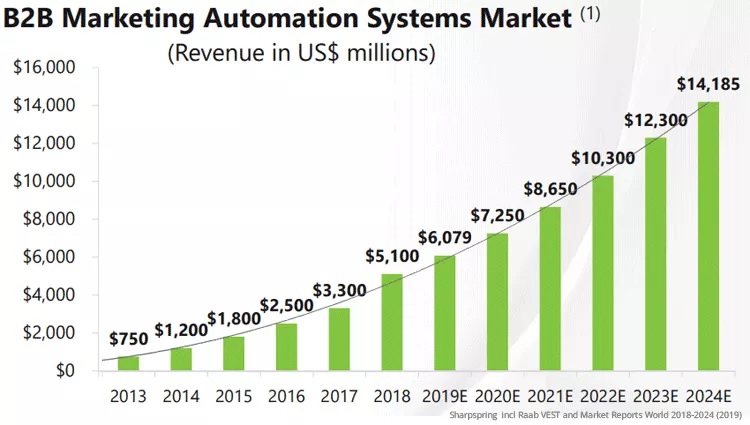
Today, marketing automation boasts tremendous popularity, as 51% of all companies are already using it. In turn, the marketing automation software market experiences substantial growth, with Statista predicting it will “grow at a CAGR of 19.2 percent between 2020 and 2025”. In numbers, the industry’s 2019 $6 billion size seems set to almost triple by 2025. Even as regards B2B specifically, despite its unique challenges, forecasts remain very consistent with Statista’s:

Alt-tag: A graph on B2B marketing automation systems market’s expected growth.

Source: https://cdn-bladd.nitrocdn.com/tdeqYdwyGWepDDsunzzPpBNBtrwvfICC/assets/static/optimized/rev-359a83b/wp-content/uploads/2020/07/B2B-Marketing-Automation-systems-market-size.png

Marketing automation use cases

Marketing is a very broad field, however. In turn, marketing automation can help your business grow through multiple different applications, depending on your specific goals and needs. Three of the most notable use cases for it are the following.

#1 Email campaigns

Email marketing remains a powerful digital marketing mainstay, with excellent Return on Investment (ROI). Email also remains the primary communication tool of most businesses, so automation could only expand to meet its needs.

Email marketing automation offers to automate emails based on customizable event triggers. Such triggers may include actions taken, lead status, segment-based scheduling, and more. These offer unparalleled convenience and demonstrable benefits, as we will cover next.

#2 Social media marketing

Another prominent marketing channel lies in social media. Expanding platforms offered marketers access to vast untapped audiences and still serve as the primary brand awareness generators for many.

Still, social media is an inherently challenging marketing front, as audiences increasingly value authentic engagement over hard-sell outreach. In this regard, automation seeks to both streamline the process and prevent problems on social media, avoiding mistakes such as inconsistent schedules and suboptimal audience insights collection..

#3 Customer Relationship Management (CRM)

Finally, as companies increasingly value customer interaction quality, CRM emerged as a series of practices seeking to ensure it. This gave rise to dedicated CRM software, whose most basic features now include automation of focus-specific types.

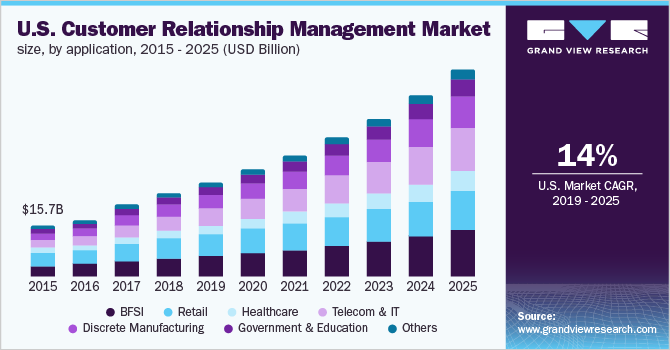
Reflecting the overall growth of automation software, CRM is now the single largest software market in the world. Forecasts also outline a continued upward trajectory, at that:

Alt-tag: A graph on the expected growth of the CRM market size in the US.

Source: https://www.grandviewresearch.com/static/img/research/us-crm-market.png

How marketing automation can help your business grow

With all of the above in mind, we may now pinpoint exact benefits of marketing automation across different applications. For the sake of text economy, we will focus on 4 among the most notable ones.

#1 Better lead generation and lead nurturing

Among the primary concerns of any business come lead concerns. Even the most robust lead generation, acquisition, and conversion systems may have room for improvement, which directly translates to revenue.

In this regard, automation offers distinct benefits for each phase:

  • Lead generation and acquisition. Simple email automation can drastically improve response times to new lead queries, and let businesses swiftly respond to actions taken. Studies find that response times alone can have a drastic impact in this phase.
  • Lead nurturing. Once leads enter your sights, further email triggers, CRM segmentation, and other forms of automation can visibly benefit lead nurturing. This includes re-engaging old and lapsed leads, where personalization is key.
  • Conversion. Finally, automated outreach, personalized offers, better customer service through query delegation automation, and similar practices can enhance conversion rates. Proper nurturing alone can offer significant benefits in this regard, as Campaign Monitor finds.

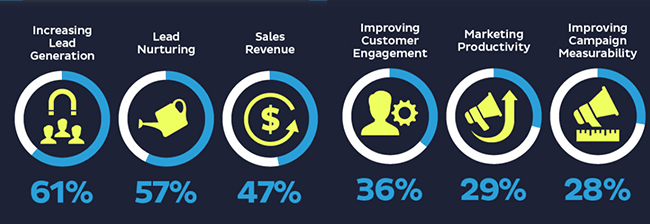
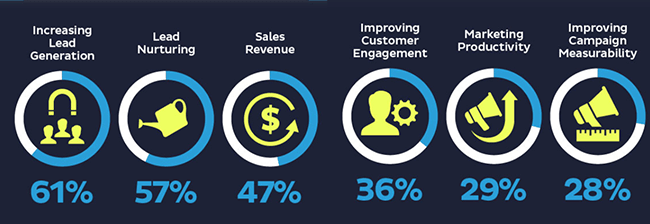
This may be the most substantial way in which marketing automation can help your business grow, all in all. Indeed, most marketers prioritize lead-related improvements over most else:

Alt-tag: An infographic on marketers’ most coveted benefits of marketing automation.

Source: https://startupbonsai.com/wp-content/uploads/2020/01/Statistic-7-Marketing-Automation-Statistics.png

#2 Better omni-channel marketing

Similarly, omni-channel marketing presents immense opportunities – and considerable challenges. Marketers have to focus on different content distribution channels as their companies expand to meet customers’ expectations.

Marketing automation rises to the challenge, in many cases directly evolving to do so. Its benefits in this regard can expand to, among others:

  • Segmentation. Smart segmentation and automatic lead scoring can save marketing departments considerable time and enhance their efficiency.
  • Content distribution. Personalized, conditional, action-driven, and other types of content distribution can further enhance lead nurturing and help secure more sales.
  • Interaction management. Finally, channel consolidation and automatic notifications can notably improve interaction quality, facilitating deeper bonds, more customer trust, and more customer satisfaction (CSAT) overall.

Of course, exact automation applications will vary depending on each marketer’s scope and existing assets. However, as the ongoing pandemic continues to fragment customer journeys, omni-channel marketing should remain a prominent approach.

#3 A streamlined workflow and less human error

Another inherent benefit of marketing automation lies in more streamlined workflows. In turn, automatic data entry and trigger-dependent outreach can minimize the room for human error, which remains a performance inhibitor.

Examples of workflows one may automate and streamline include:

  • “Welcome” workflow, triggered by signups
  • Re-engagement workflow, based on specifically defined periods of inactivity
  • Cart abandonment workflow, triggered on cart abandonment

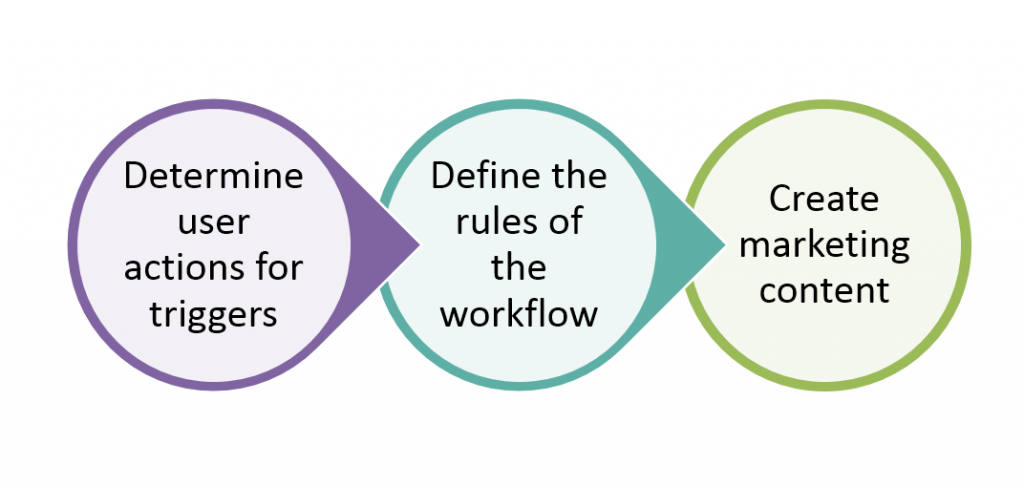
In all such cases, automation offers to circumvent human involvement until creative input is needed – thus reducing human error. Of course, each workflow automation type will differ, but they will all follow a similar trigger-based structure:

Alt-tag: An illustration of the typical workflow automation structure.

Source: https://blog-assets.freshworks.com/freshsales-crm/wp-content/uploads/2021/03/23131733/triggers-3-1024×486-1.png

#4 Enhanced productivity and better time management

Finally, another inherent benefit of marketing automation comes in the form of better time management and enhanced productivity. Jared Atchison, the co-founder of WPForms, expresses this in the simple truism that “[p]utting energy into smaller tasks […] wastes valuable time you could spend maximizing profit and nurturing leads”.

Automation’s productivity benefits can notably include:

  • Expanding operations outside of regular working hours
  • De-cluttering daily schedules for more creative output
  • Swifter reactive actions through task delegation and automatic notifications

In combination, such benefits can have a massive effect on both final revenue and cost. Studies quantify the potential operational cost benefit as up to 30%, a substantial benefit to any business.

Conclusion

In summary, marketing automation can help your business grow in a plethora of ways. At its core, it offers unprecedented convenience and an invaluable time management asset. Problem-solving applications may manifest these qualities in personalized outreach, more efficient lead nurturing, enhanced internal communications, and more. As such, as digital marketing expands to more channels and faces new challenges, automation will likely remain an indispensable asset.

How to Choose a Color for Your Website

source: https://www.websitebuilderexpert.com/designing-websites/how-to-choose-color-for-your-website/

12 Graphic Design Trends to Watch in 2022

Engaging visuals are key to standing out in busy social media feeds, and as such, it’s worth taking note of trend listings like this and considering whether you need to update your brand style and format.

6 Tips to Re-engage Old Sales Leads

Here’s a guest post from Mary Aspen Richardson.

Despite your best efforts, from marketing to sales to post-sale engagement, you will inevitably lose leads. Most new leads will simply never convert, regardless of how much a powerful marketing funnel will help the odds. Many existing leads will eventually fall off, and it’s indeed important to know when to give up. However, some old leads will convert with proper re-engagement outreach, and it might be too valuable for you not to try. For those cases, we have gathered six tips to re-engage old sales leads, dividing each between dos and don’ts.

Why do sales leads get lost?

First, let’s briefly discuss why old sales leads get lost in the first place.

Research suggests much of the fault lies with marketing teams and sales representatives. Initially, Hubspot cites research that suggests lead nurturing is still distinctly lacking, especially for B2B businesses. Among other statistics, they report that:

  • “65% of B2B marketers have not established lead nurturing[, and] 79% of B2B marketers have not established lead scoring.”
  • “79% of marketing leads never convert into sales. Lack of lead nurturing is the common cause of this poor performance.”
  • “46% of marketers with mature lead management processes have sales teams that follow up on more than 75% of marketing-generated leads.”

This already paints a bleak picture. Undoubtedly, new and old leads alike will slip through the cracks if lead nurturing is not present. Indeed, MarketingDonut research confirms this, finding that “80% of non-routine sales occur only after at least five follow-ups”. However, sales reps give up way sooner:

  • “44% of salespeople give up after one “no”.
  • 22% give up after two “nos”.
  • 14% give up after three “nos”.
  • 12% give up after four “nos”.”

Granted, they have the reputation of being “pushy” to compete with – as we’ll discuss below. However, there seems to be room for considerable improvement between the proper implementation of lead scoring and outreach insistence.

Re-engage old sales leads

So, how exactly can you re-engage old sales leads effectively? After proper branding efforts, which will make your leads more susceptible to re-engagement, you may consider the following six factors.

#1 Personalization

The fundamental first step lies in personalization, from copy to timing. Re-engaging leads with the blanket, soulless copy at random times will not suffice, as it doesn’t for traditional marketing. Thus, you should begin by leveraging each lead’s data – ideally gathered through Customer Relationship Management (CRM) software.

Do: Consult your CRM.

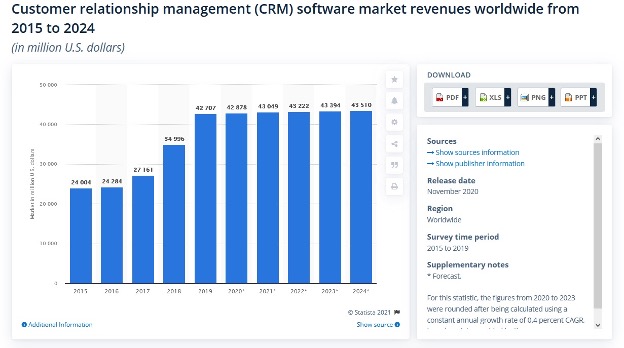
In this regard, CRM is tailor-made for personalization and automation alike – as we’ll cover later. So, CRM can be your ally in this effort. Use its lead management features and leverage all the data it offers to re-engage old sales leads. There’s a reason why it’s currently the most prominent software market in the world, according to Statista:

Alt. tag: A graph on Customer Relationship Management software market revenues worldwide from 2015 to 2024.

Source: https://www.statista.com/statistics/605933/worldwide-customer-relationship-management-market-forecast/

Don’t: let your database become outdated.

However, CRM’s database is only as accurate as you allow it to be. To avoid needless clutter, consider regularly scrubbing your database of invalid email addresses, definitively dead leads, and other outdated data. Coupled with good lead nurturing, this will help you focus your efforts.

#2 Emails

Next, having touched on emails, they are likely the very first option for re-engagement. Still, the fact they work does not mean they will work without proper care.

Do: use email meticulously.

Email is indeed one of the best ways to reach out to old leads. After all, they have opted to receive emails, so they’re more likely to open them and act on them. Moreover, emails offer room for considerable personalization, from subject lines to copy and timing. Thus, email is an excellent channel through which to re-engage.

Don’t: waste your customers’ time.

However, even with personalization in place, you should still opt for simplicity, clarity, and brevity. Baydin research finds that the average user receives 147 emails a day and spends over 2 ½ hours on them. To ensure old leads engage with your emails at all, you should ensure they’re short, sweet, and to the point.

#3 Social media

Another channel to consider, whether email outreach has failed or not, is social media. This channel, too, warrants examination.

Do: Use social media to re-engage old leads.

First, social media are indeed a demonstrably effective channel to re-engage old sales leads through. Such platforms as Instagram offer notable engagement rates, and social media outreach is often perceived as less intrusive. Should your lead data suggest there are opportunities in social media, you should act on them.

Don’t: become pushy.

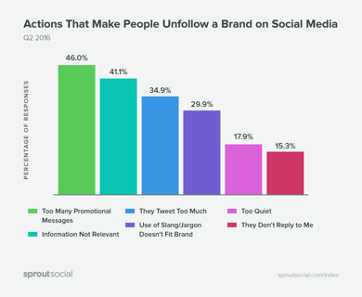
That’s not to say, however, that you should do so indiscriminately or relentlessly. Responding to your audiences’ messages and posts or reaching out yourself can be effective, but there is a fine line. Where it is exactly will, of course, depend on your own data, but you should mind the “pushy” label. According to SproutSocial’s data, audiences definitely do:

Alt. tag: Statistics on “actions that make people unfollow a brand on social media”.

Source: https://media.sproutsocial.com/uploads/2018/10/graph-unfollow-actions-1.png

#4 Automation

Next comes automation. This handy practice offers unquestionable efficiency, especially if you’re addressing vast numbers of leads you can’t manage manually.

Do: re-engage old leads through automation.

To address the efficiency aspect, consider how CRM-backed automation can enhance your efforts through:

  • The ability to process massive numbers of leads
  • Integration with lead management tools for enhanced personalization
  • The extension of email outreach outside of working hours

Through these benefits and others, automation can offer a tremendous asset.

Don’t: do blanket automation.

Blanket automation can do more harm than good. Consider all of the statistics cited thus far; a lack of personalization will, in most likelihood, fail. Instead, consider custom event triggers for different lead segments and have your data inform your actions.

#5 Re-engagement copy

Now, having touched on personalization manifold, we may discuss re-engagement copy. Based on each lead’s history and status, this is where your re-engagement efforts will succeed or fail.

Do: Offer resources, relevant product information, and discounts.

Keeping outreach timing and overall copy simplicity in mind, you should strive to earn your leads’ interest. To do so, consider offering your leads any of the following, among others:

  • Resources; your leads may show interest in free webinars, guides, relevant posts, and other material.
  • Relevant product information; consider informational emails that remind leads of what they’re missing or provide updates on your products that may entice them.
  • Discounts; finally, nothing encourages new sales as much as discounts, as Steam sales cited by Gamasutra prove.

Don’t: Go for the hard-sell.

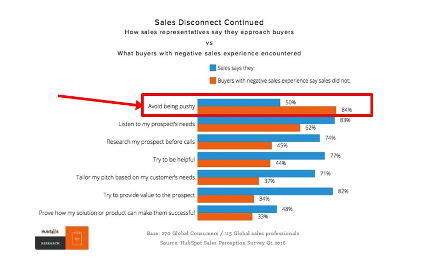
That said, going for a hard-sell message will most often, if not always, fail to re-engage old sales leads. Instead, you may go for softer warm-up outreach, offering proverbial gifts like the above. That’s because there is the dreaded aforementioned “pushy” label to avoid at all costs, as Hubspot notes:

Alt. tag: A graph on the perceptions of sales reps and buyers on their experiences with sales outreach.

Source: https://www.saleshacker.com/wp-content/uploads/2019/02/lead-re-engagement-content-image.png

#6 Re-engagement style

Finally, copy aside, there is also your outreach style to keep in mind. Here, too, we may consolidate all of the above into a simple pair of suggestions.

Do: Be professional, but personalize.

First, your outreach should, generally, remain professional. Consider a traditional email format for personal outreach and professional copy style for product updates. Still, your lead data may suggest you can try more casual styles to better effect. Thus, don’t be afraid to personalize your style depending on your data.

Don’t: Be too casual.

That said, however, you should, in most cases, avoid becoming too casual. Regardless of your lead’s status, you will most likely fail to re-engage them if you’re approaching them without due decorum. Avoid emojis, slang, and other inappropriately casual elements – unless your data explicitly suggest that you should use them.

Conclusion

To summarize, it’s no easy endeavor to re-engage old sales leads. First, you should ensure you leverage as much lead data as possible to facilitate proper personalization. Then, you should use email, social media, and other platforms wisely and in accord with your data. Finally, it would be best to employ automation in equally data-driven ways and carefully examine your copy and style to refine your outreach. In all cases, you should strive to avoid salesy language from the start and instead approach leads with helpful intent. In doing so, you may avoid the “pushy” label and instead offer meaningful outreach that attracts leads back.

Why Your Website Should be Optimized for Mobile

Mobile usage is now a key connector, in an increasing range of ways, and providing an optimized, engaging mobile experience is key to maximizing your business performance.

Home Buyers Eager to Act Sooner Rather Than Later

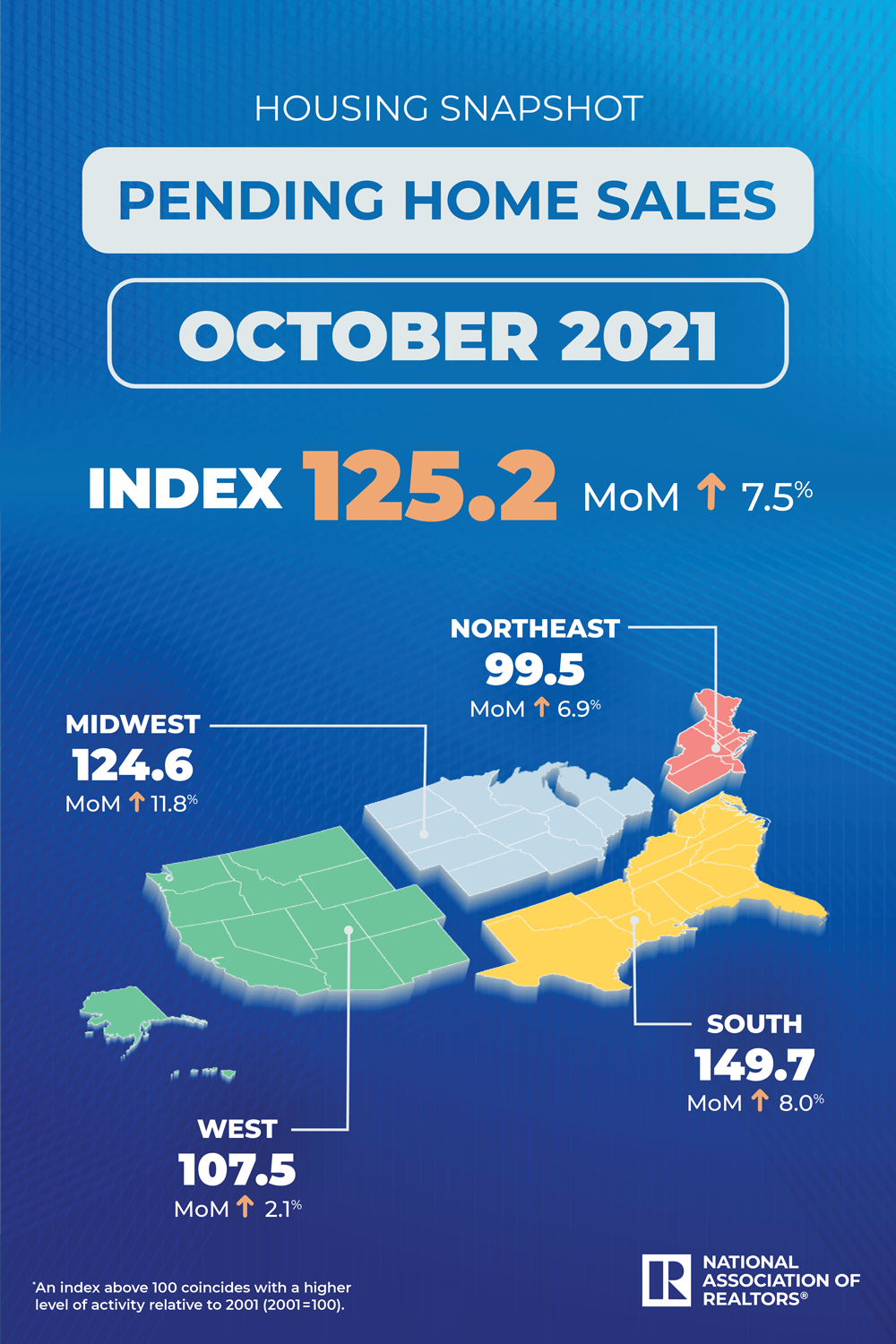
Contract signings climbed 7.5% in October, and home sales for 2021 are on pace to hit a 15-year high, the National Association of REALTORS® reported Monday. Pending home sales rebounded after a decline in September.

Despite rising mortgage rates, home buyers appear undeterred by higher financing costs and home prices. Contract activity increased month over month in all four major regions of the U.S. NAR’s Pending Home Sales Index is a forward-looking indicator of home sales based on contract signings.

“Motivated by fast-rising rents and the anticipated increase in mortgage rates, consumers that are on strong financial footing are signing contracts to purchase a home sooner rather than later,” says Lawrence Yun, NAR’s chief economist. “This solid buying is a testament to demand still being relatively high, as it is occurring during a time when inventory is still markedly low.”

Yun notes that the gain in October assures that total existing-home sales in 2021 will exceed 6 million. That will mark the top performance in home sales in 15 years, Yun says.

He does forecast, however, home prices will increase at a “gentler pace” over the next several months and expects demand to be milder as mortgage rates increase. The 30-year fixed-rate mortgage averaged 3.10% last week, up from a 2.72% average a year ago, Freddie Mac reports.

Last month, contract signings increased at the strongest pace in the Midwest and South regions. The Northeast increased 6.9% in October, but contract signings are still down 10% from a year ago. The Midwest saw contract signings climb 11.8% in October; pending home sales are up 5.1% from a year ago.